Sell
Pallets
Have surplus pallets in the Baltimore area? Tell us what you have and we pass the request to a partner supplier. Whether a supplier takes them depends on grade, size and quantity.
How It Works
Request a Quote
Tell us what you have: roughly how many pallets, what sizes, what condition, and which part of the Baltimore area they are in. The request is free and carries no obligation.
We Pass It On
We are a referral service. We send your details to a partner supplier in our network that handles used pallets.
The Supplier Reviews the Load
The supplier may ask for photos, a count by size, or a look at how the pallets are stacked and where they sit. Based on that, the supplier decides whether the load is a fit.
A Partner Supplier Follows Up
If the load is a fit, the supplier follows up directly about terms and how the pallets will be collected. Availability depends on partner suppliers, and requests are for the Baltimore area.
Grade and Condition
Suppliers look first at how much repair a pallet needs. Sound, lightly repaired pallets are easier to place than broken ones.
Size and Type
Common sizes such as 48x40 are the easiest to find a home for. Odd sizes and unusual builds may suit fewer suppliers.
Quantity and Access
A larger, tidy lot is simpler for a supplier to plan around. Dock height, forklift access and trailer room also matter.
Pricing by Quote
Whether a supplier takes a load, and on what terms, comes from the supplier's quote. It depends on grade, size and quantity.
What Affects Whether a Supplier Takes Your Pallets
Surplus pallets are not all worth the same to a buyer, and some loads are only worth hauling away. Here is what partner suppliers generally weigh, so you can describe your load clearly in a quote request.
Reusable or Scrap
Suppliers tend to sort used pallets into three streams: pallets that can go back into service as they are, pallets that can be repaired, and pallets that are only good for their lumber or for recycling. A load that is mostly reusable is more likely to be bought.
A load that is mostly broken may still be taken, but more as a removal than a sale. Say honestly where your pallets fall; a supplier who finds out at the dock usually revises the terms.
Size and Construction
The 48x40 GMA pallet is the size most often requested in North America, so loads of it are usually the easiest to place. Other sizes such as 48x48, 42x42, 40x48 or 1200x1000 have narrower demand and tend to suit buyers with a specific use for them.
Construction matters too. Stringer pallets are common and widely accepted. Block pallets allow forklift entry from all four sides, and some buyers look for them. Two-way or four-way entry, and whether the deck boards are intact, belong in your description.
Grades in Plain Terms
Grade names vary between suppliers, but the idea is consistent. An A grade pallet has few or no repairs. A B grade pallet has some repairs or a mix of board colors. A C grade pallet has had heavier use and may need work before it can carry a load again.
Do not worry about assigning an exact grade. A few clear photos and a plain description, such as mostly intact with some replaced boards, give a supplier enough to start the conversation.
Heat-Treated and Stamped Pallets
Pallets used for international shipments are normally heat-treated under ISPM 15, which calls for a core temperature of 56 °C held for 30 minutes, and carry an HT stamp. Some buyers want stamped pallets and cannot use unmarked ones, so mention whether yours are marked and whether the stamp is still legible.
Pallets that were chemically fumigated rather than heat-treated carry an MB mark, and methyl bromide has been phased down in many places. If you are not sure what your pallets are, say so and send a photo of the stamp.
Quantity, Sorting and Access
Suppliers plan around trailers and loading time. A lot that is already stacked by size, with clear access for a forklift or a dock, is easier to take than a mix scattered around a site. Recurring surplus can interest a supplier differently than a single cleanout, so mention which one you have.
Tell the supplier where the pallets are, whether they are indoors or outside, and whether a truck can reach them. Loading arrangements are worked out with the supplier, not set by this site.
Storage and Cleanliness
Pallets stored outdoors and in contact with the ground can absorb moisture, rot or grow mold, and that can move them down a grade. Pallets that held oil, chemicals or food residue may not be accepted at all, or may be treated differently.
If you know the pallets carried something that could have soaked in or spilled, say so up front. Check current regulations if the pallets held anything you are unsure about, and ask the supplier what it can accept.
How to Describe Your Load
The more specific your request, the less back-and-forth with the supplier. A few minutes of preparation helps a supplier decide whether your pallets are a fit.
Prepare Before You Ask
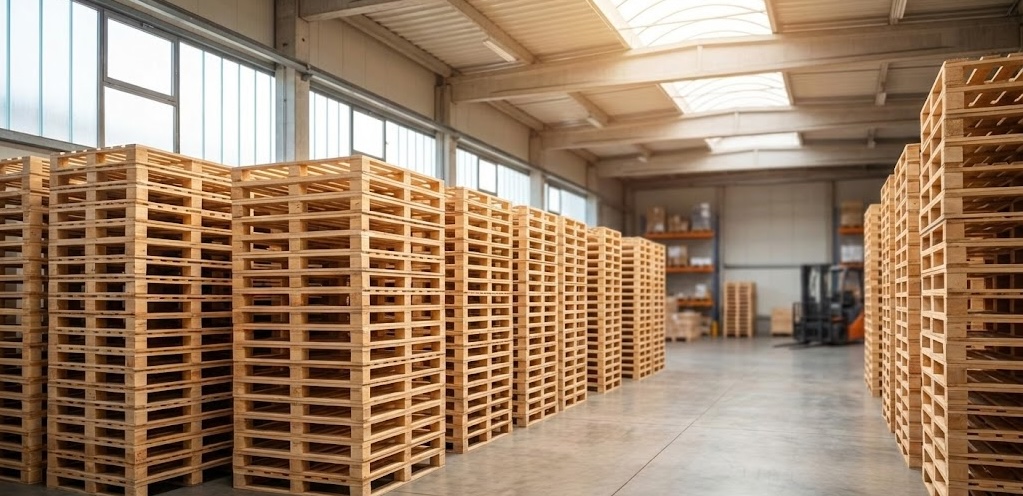
Sort pallets by size and condition if you can, and stack each group together so it is easy to count. Remove loose debris, trash and any pallets you already know are unsafe. Even a rough sort tells the supplier whether the lot is one uniform size or a mix.
Photos are the quickest way to show condition. Take one wide shot of the stacks, one close-up of a typical pallet, and one of any stamp or damage. Mention how long the pallets have been stored and where.
The Pallets
- • Approximate count by size
- • Wood or plastic
- • Stringer or block
- • Condition in your own words
- • Any ISPM 15 stamp or marks
The Site
- • General location in the Baltimore area
- • Indoors or outdoors
- • Dock or ground level
- • Forklift on site or not
- • Room for a trailer to reach them
The Situation
- • One-time cleanout or recurring surplus
- • Flexible on pickup timing or not
- • Any pallets known to be contaminated
- • Photos of the stacks
- • Best way to reach you
We do not buy, store or move pallets ourselves. We pass your request to a partner supplier, and the supplier decides whether and how to take the load. Requests are for the Baltimore area, and availability depends on partner suppliers.
Frequently Asked Questions
What kinds of surplus pallets can I ask about?
Wood and plastic pallets in standard or odd sizes. Whether a partner supplier takes a given load depends on condition, size and quantity. Damaged pallets may be sent to repair or recycling instead.
Will a supplier definitely buy my pallets?
Not necessarily. Some loads are bought, some are only hauled away, and some do not fit what a supplier handles. The supplier decides after reviewing your details, and any terms come by quote.
How is a load evaluated?
Suppliers look at grade or condition, size, wood or plastic, any ISPM 15 stamp, how clean the pallets are, how many there are, and how easy they are to reach and load.
Does it matter how many pallets I have?
Yes. A larger, sorted lot is easier for a supplier to plan around, but you can still submit a smaller one. Availability depends on partner suppliers in the Baltimore area.
Do I need a dock or forklift?
Tell the supplier what access you have. Loading arrangements are worked out with the supplier, so describe the site, including ground-level loading, in your request.
Can I send mixed sizes and conditions?
Yes. Describe what is in the mix, and sort or stack by size beforehand if you can. A clear breakdown helps a supplier respond.
What happens to broken or unsafe pallets?
A partner supplier may route them to repair or recycling. Mention damaged pallets in your request so the supplier knows what is in the load.
What should I include in my request?
Approximate count by size, wood or plastic, stringer or block, condition, any stamps, where the pallets are stored, how a truck can reach them, and photos if you have them.
What does the quote request cost?
The quote request is free and carries no obligation. A partner supplier follows up with you directly.