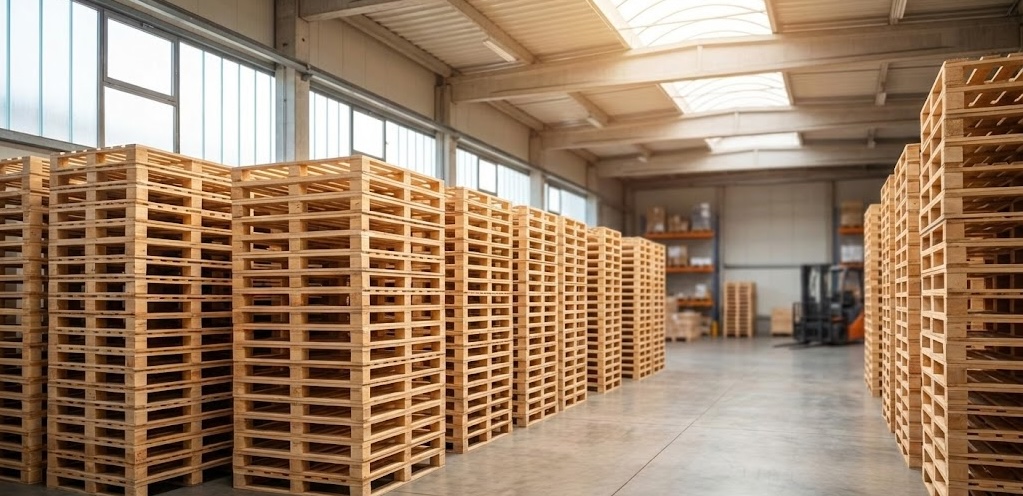
Custom
Pallets
Need a size that is not on the standard list? Send your dimensions and load details, and a partner supplier follows up on a custom pallet quote.
Custom Options
Dimensions
Length, width, and height to suit your product and racking, within what a partner supplier can build.
- • Non-standard sizes
- • Oversized pallets
- • Compact footprints
- • Exact measurements
Load Capacity
Tell the supplier your heaviest load so they can choose boards, stringers, or blocks to suit.
- • Reinforced construction
- • Extra stringers/blocks
- • Heavier lumber
- • Ask about sample units
Entry Configuration
Choose 2-way or 4-way entry, partial 4-way, or specialized forklift access patterns.
- • Standard 2-way
- • Full 4-way
- • Partial 4-way
- • Notched stringers
Deck Options
Top deck, bottom deck, or double-face configurations with custom board spacing.
- • Single-face
- • Double-face
- • Flush design
- • Custom spacing
Materials
Wood, plastic, or combination materials, depending on what the supplier offers.
- • Hardwood
- • Softwood
- • Plastic
- • Composite
Special Features
Ask whether a supplier can add markings or finishes.
- • Painted logo
- • Paint/stain finish
- • Stenciled markings
- • Color coding
How a Custom Request Works
Request
Send the form with your dimensions, load, and quantity. It is a free, no-obligation quote request.
Supplier Follow-Up
A partner supplier follows up, may ask clarifying questions, and quotes based on grade, size, and quantity.
Confirm the Spec
Review the dimensions and construction with the supplier. For larger orders, ask whether a sample is possible.
Build
The supplier builds to the confirmed spec. Timing depends on the supplier and materials.
Delivery
Ask the supplier about delivery to your site in the Baltimore area, and about reorders.
When a Custom Size Makes Sense
Most loads ride fine on a standard pallet. A custom size is worth asking a partner supplier about when a standard one causes a real problem.
The Product Does Not Fit
If your product overhangs a 48x40 deck, or sits in the middle of a much larger one with wasted space around it, a custom footprint can make sense. Long items such as pipe, panels, or rolled goods are common examples. Overhang is a frequent cause of damage when cartons are pinched by racking beams or crushed in stacking, so measure the real load before settling on a size.
Racking, Trailers, and Containers
Sometimes the pallet is fine and the space is the constraint. A rack bay with fixed beam spacing, a machine feed, or an export container may favor a particular length and width. Standard sizes such as 48x48, 42x42, or 1200x1000 millimeter may already be close, so check those before asking for something unique. Send the supplier the rack opening or container size you are working around.
Heavy, Uneven, or Fragile Loads
Dense loads such as machinery, coils, or stone may need closer-spaced boards, extra stringers, or a block design. Uneven loads that concentrate weight in one spot need a supplier who knows where the load will sit. Describe the load honestly, including how it is wrapped or strapped, and let the supplier recommend a construction rather than guessing at one.
What to Put in Your Request
The more a supplier knows up front, the fewer back-and-forth questions before a quote. Include as much of this as you can in the form.
Size and Shape
Give length and width in the same order every time, and say which direction the stringers or leading boards should run. State the overall height you can accept, since forklift openings, rack clearances, and dock doors can all limit it. If the product has feet, legs, or a base that must sit in a recess, mention it.
A sketch or phone photo of the product on the floor, with a tape measure beside it, answers many questions quickly. If you have a drawing of the product, mention that you can share it.
Load Details
Tell the supplier the heaviest load that will ever sit on the pallet, not the average one. Say whether it is spread evenly or concentrated, and whether pallets will be stacked on each other, stored on the floor, or placed in racking. Racking is the most demanding case because the pallet is supported only at its ends or sides.
Mention how the load is secured, such as stretch wrap or strapping, and whether it will travel by truck or ship.
Handling and Entry
Say what moves the pallet: forklift, pallet jack, or automated equipment. Two-way entry lets forks in from two sides; four-way lets them in from all four, which matters if your layout or equipment needs it. Stringer pallets are usually two-way, while block pallets are four-way.
If hand pallet jacks are used, note the wheel width, since a notched or low-clearance bottom can snag them.
Material, Treatment, and Quantity
Say whether you want new or used wood, a particular grade, or plastic. For export shipments, ask the supplier for ISPM 15 stamped pallets. Heat treatment means the wood core reaches 56 °C for at least 30 minutes, and the stamp shows the HT mark. Rules vary by destination country, so check current requirements for your shipment.
Finally, give a rough quantity, whether the order repeats, and the delivery location in the Baltimore area. Pricing is by quote from partner suppliers and depends on grade, size, and quantity.
Custom or Standard?
A custom pallet is usually quoted differently from a standard one, because a supplier has to set up for a size they do not build every day. Quantity matters too: a supplier may be more willing to build a one-off size for a repeating order than for a single pallet. Ask each supplier how they handle small runs, and whether a sample pallet can be made before a full order.
It also helps to ask whether a recycled or repaired pallet in a near-standard size could work. Reusing a pallet avoids building a new one, and many suppliers can trim or modify an existing pallet. If you are comparing quotes, send every supplier the same details so the numbers line up.
Availability depends on partner suppliers serving Baltimore City and County, Towson, Dundalk, Essex, Columbia, Glen Burnie, Annapolis, and the BWI corridor. Submit the form above and a partner supplier follows up with questions or a quote.
Frequently Asked Questions
What information should I include when requesting a custom pallet?
Product dimensions, the heaviest load per pallet, how the load is stacked or stored, the equipment that handles it, whether it ships by truck or export, and a rough quantity. A photo or sketch helps.
Can a supplier build a pallet for heavy or uneven loads?
Partner suppliers can often add stringers, use blocks, or choose thicker lumber. Describe how the weight sits on the pallet so the supplier can recommend a construction.
Will I get a drawing or spec sheet?
That depends on the supplier. Ask whether they can confirm the dimensions and construction in writing before they build.
Are custom pallets available in wood and plastic?
Custom wood pallets are the most common. Plastic may be an option for some sizes, so say which material you prefer and ask the supplier what they can offer.
Can a custom pallet be heat-treated for export?
Ask the supplier for ISPM 15 stamped pallets. Heat treatment brings the wood core to 56 °C for 30 minutes and is marked with an HT stamp. Check current requirements for your destination.
Is there a minimum order for custom sizes?
Minimums vary by supplier and design. Include your expected quantity in the request and ask each supplier about small runs.
Can I get a sample before a full order?
Some suppliers may make a sample for larger orders. Ask about this in your request, especially if the size or load is unusual.
Should I check standard sizes first?
Yes. Sizes such as 48x40, 48x48, 42x42, and 1200x1000 millimeter may already fit, and a standard or repaired pallet may be simpler to source.
Can pallets be marked or color-coded?
Some suppliers offer painted or stenciled markings. Ask what is possible for your order.
How does pricing work?
Pricing is by quote from partner suppliers and depends on grade, size, and quantity. Requests come from the Baltimore area, and availability depends on the supplier.