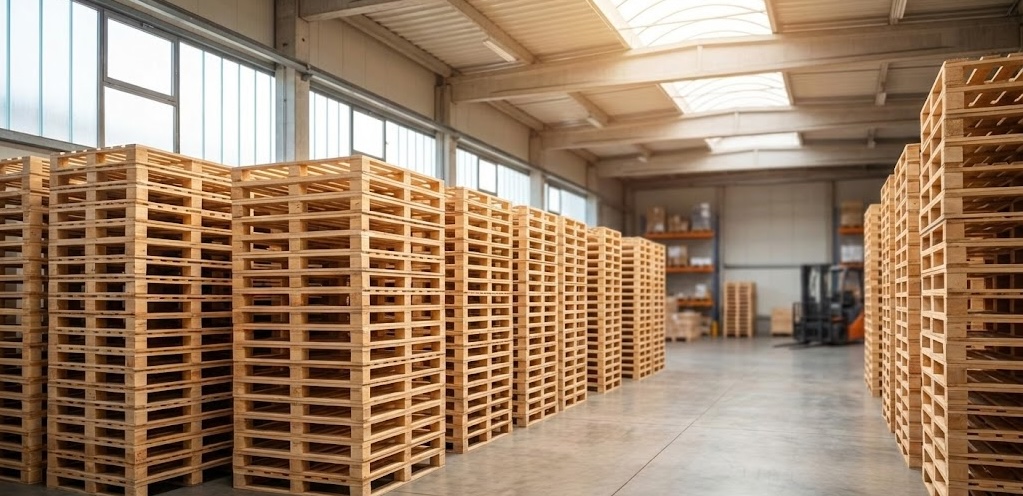
Wood
Pallets
Wooden pallets are the most familiar pallet type: softwood or hardwood, stringer or block, new or reconditioned. Request a free, no-obligation quote and a partner supplier follows up.
Standard Sizes
GMA Standard
Most common size in North America. Grocery Manufacturers Association standard.
Square Pallet
Ideal for drums, barrels, and bulk containers. Four-way entry for maximum flexibility.
Rotated Footprint
Same footprint as 48 x 40 with the dimensions listed the other way around. Confirm which way the boards run.
Telecom Pallet
Square footprint used for telecom equipment and other heavy items. Ask how it is built.
Beverage Pallet
A compact square size used in beverage and bottling work.
Made to Order
Odd-sized loads can be built to custom dimensions through partner suppliers.
Wood Types
Hardwood
Oak, maple, and other hardwoods. Denser and heavier, often chosen for heavy or repeated use. Usually costs more.
Softwood
Pine, spruce, and fir. Lighter and widely used. A common choice for general-purpose pallets.
Mixed
A combination of hardwood and softwood. A middle option; ask the supplier which parts use which wood.
What to Specify
Heat Treatment
Pallets for export are normally heat-treated under ISPM 15 and stamped. Ask the supplier for ISPM 15 stamped pallets and check current regulations for your destination.
Grades
Grade A pallets have few repairs, grade B some repairs or mixed colors, and grade C have seen heavier use. Pick the grade that matches what you are shipping.
Entry Type
Two-way pallets take forks from two sides. Four-way pallets take forks from all four, which helps in tight docks and when turning loads.
Reuse and Recycling
Repairing and reusing a pallet avoids building a new one. Used wood pallets can be requested for pickup, repair, or recycling through partner suppliers.
Choosing Wood Pallets
A plain-language guide to the choices that matter when you ask for a wood pallet quote in the Baltimore area
Softwood, Hardwood, or Mixed
Most wood pallets are made from softwood such as pine, spruce, or fir. Softwood is lighter, easier to handle by hand, and widely used for general shipping. Hardwood such as oak is denser and heavier. It tends to stand up better to rough handling and repeated reuse, and it usually costs more. Mixed pallets combine the two, for example using hardwood where the pallet takes the most wear.
There is no single right answer. For one-way shipping, a lighter softwood pallet is often enough. For pallets that circle through your dock many times, or that carry heavy or awkward loads, ask about hardwood or mixed. Tell the supplier what the pallet will carry and how often it will be reused, and let them suggest what fits.
Stringer or Block
A stringer pallet has three parallel boards, the stringers, running between the top and bottom decks. It is the most familiar design and usually accepts forks from two sides. A block pallet has blocks between the decks, which lets forks and pallet jacks enter from all four sides. Block pallets are often chosen where loads are turned or handled from several directions.
If you use a pallet jack, conveyor, or racking, mention it when you ask for a quote. Racking in particular can be picky about how a pallet is supported, so tell the supplier what you store on and ask them to confirm the design suits it. Also say whether small cartons need closely spaced deck boards.
Moisture and Storage
Wood takes up and gives off moisture with the air around it. A damp pallet is heavier, can grow mold, and may swell or shrink as it dries. Dried lumber is generally more stable, while freshly cut wood can shrink as it dries out. If your product is sensitive to moisture or odor, say so up front and ask what the supplier can offer.
Storage matters as much as the pallet. Keep pallets off bare ground, on a dry surface, and under cover where you can. Stack them flat and tidy, and use older pallets first. Before use, look for mold, protruding nails, loose or split boards, and anything that could snag product or hurt someone handling them.
What to Tell a Supplier
A useful request names the size you need, whether you want new or used and which grade, stringer or block, softwood, hardwood, or mixed, and roughly how many. Add whether the pallets are for export, since export pallets should carry an ISPM 15 stamp. Mention what the pallets will carry so the supplier can suggest a suitable build.
Also give your location in the Baltimore area and say whether you want your used pallets picked up. Pricing comes from partner suppliers by quote and depends on grade, size, and quantity. Availability depends on partner suppliers, and a partner supplier follows up after you submit the form above.
Frequently Asked Questions
What wood pallet sizes can I request?
Common footprints include 48x40 (GMA), 48x48, 40x48, and 42x42, and custom sizes can be requested. Availability depends on partner suppliers.
Can I request new and used wood pallets?
Yes. Say whether you want new, reconditioned, or recycled pallets and which grade (A, B, or C) suits you. A partner supplier follows up with what is available.
Can wood pallets be heat-treated for export?
Ask the supplier for ISPM 15 stamped pallets. Heat treatment means the wood reaches a core temperature of 56 °C for 30 minutes, and the pallet carries an HT mark. Check current regulations for your destination.
What is the difference between stringer and block pallets?
Stringer pallets use three boards running between the decks and usually take forks from two sides. Block pallets use blocks between the decks and allow four-way entry. Tell the supplier what handling equipment you use.
How do I avoid moisture and mold problems?
Store pallets off the ground, on a dry surface, and under cover. If your product is sensitive to moisture or odor, ask the supplier about dried lumber and inspect pallets before use.
Should I choose softwood or hardwood?
Softwood is lighter and common for general use. Hardwood is denser and often chosen for heavy loads or repeated reuse. Mixed pallets sit in between. Describe your load and how often pallets are reused.
Can used wood pallets be picked up, repaired, or recycled?
You can request pickup, repair, or recycling through partner suppliers. Describe the quantity, condition, and where the pallets are in the Baltimore area.
What affects wood pallet pricing?
Pricing is by quote from partner suppliers. Size, grade, wood type, treatment, and quantity all play a part.